
Introduction
Rechargeable hearing aids are quickly becoming one of the most popular types of hearing aids in India, especially among adults, seniors, and professionals who want modern, easy-to-use technology. Rechargeable hearing aids now offer longer battery lives, Bluetooth connections that work well, and tiny designs that operate for a wide range of hearing loss levels. This is because digital hearing aids are getting better.
This Blog will teach you all you need to know about rechargeable hearing aids in India, such as how they work, their pros and downsides, and how to tell if they are the right choice for you.
What are hearing aids that can be recharged?
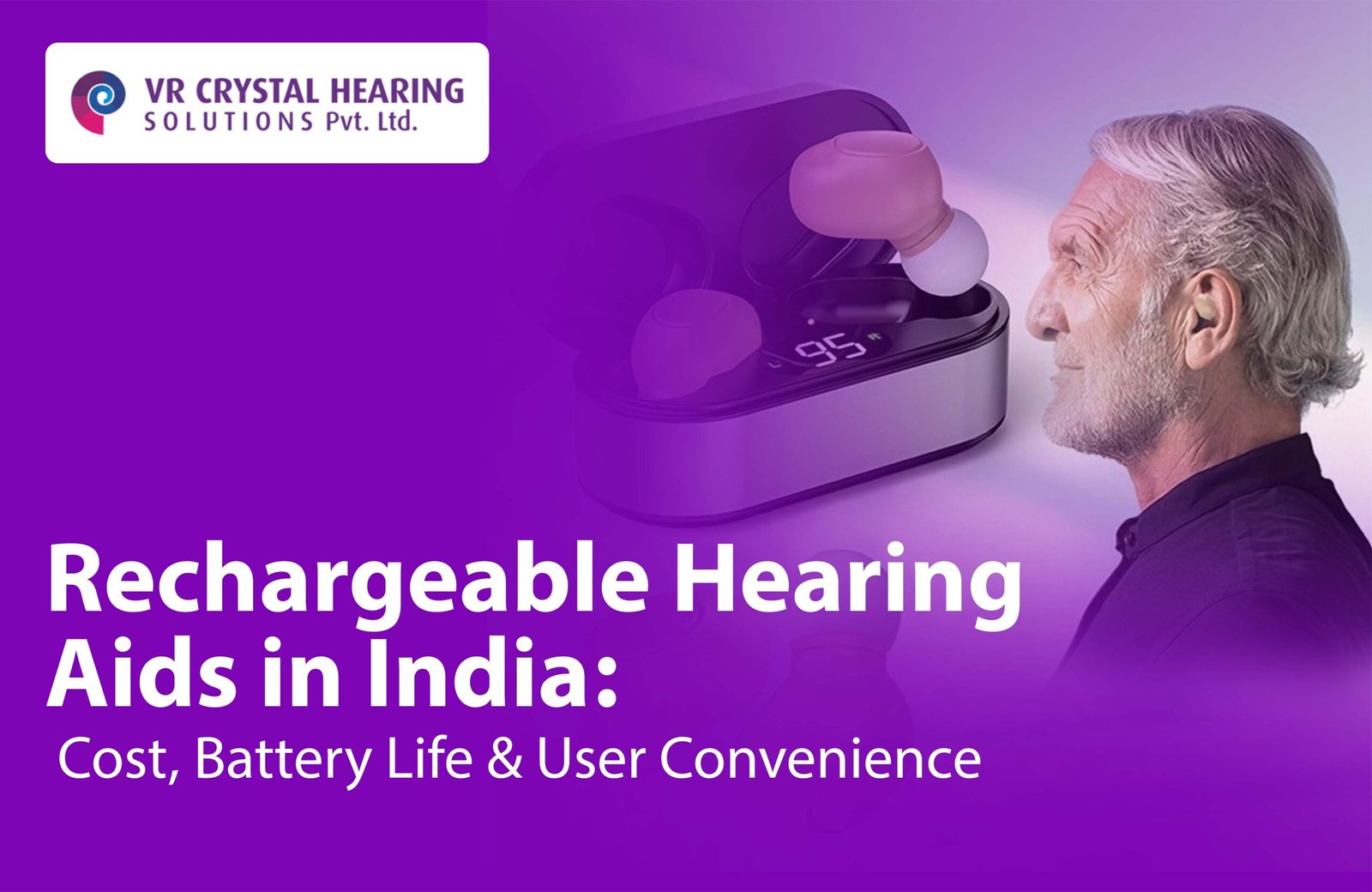
Digital hearing aids that can be charged use lithium-ion or silver-zinc batteries that are built into the device. Users don’t have to change the batteries in their hearing aids; they just put them in a charging case, like they do with wireless earbuds.
There are many different types of rechargeable hearing aids, such as:
- Rechargeable hearing aids with RIC (Receiver-in-Canal)
- Rechargeable models that go behind the ear
- Some brands of ITE (In-the-Ear) rechargeable hearing aids
- Hearing aids that can be charged by Bluetooth for those who use smartphones
These devices are popular across India since they are easy to use, work well, and last for a long time.
How hearing aids that can be charged work
Lithium-ion batteries are used in most modern rechargeable hearing aids because they are safe, last a long time, and can be used all day.
This is how they usually work:
- Use a small charging dock to charge overnight.
- You can use it all day without having to charge it again.
- Turn on and off automatically when you put it in or take it out of the charger.
- Offer quick charging benefits—just a brief charge gives you several hours of backup.
This makes them perfect for folks who are busy or who like technology that doesn’t need much upkeep.
Benefits of hearing aids that can be recharged
1. Battery life that lasts all day without stopping
Rechargeable hearing aids can be used for 18 to 30 hours on a single charge.
- Conversations all day
- Managing noise
- Streaming over Bluetooth
- Digital processing that goes on all the time
This makes sure you can hear clearly all day long.
2. No More Dealing with Small Batteries
Traditional disposable batteries might be hard to use, especially for elders, kids, or people who don’t have good finger dexterity. This difficulty is totally solved with rechargeable hearing aids.
3. Works with Bluetooth
Most rechargeable digital hearing aids let users stream sounds straight from:
- Smartphones (iPhone and Android)
- Laptops
- Smart TVs
- Tablets
Bluetooth hearing aids that can be charged again and again are great for people who talk on the phone, watch videos, or listen to music a lot.
4. Technology that is safe and good for the environment
Lithium-ion batteries are good for the environment and are enclosed inside the device, which cuts down on battery waste and makes it safer.
5. Sound Quality That Stays the Same All Day
Over time, disposable batteries lose power, which could influence how well you hear. Rechargeable batteries keep the voltage steady, which means:
- Speech that is clear
- Less noise
- Amplification that stays the same
6. Easy to take with you
A lot of brands now sell portable charging cases that can hold extra charges. This makes it easy to utilize rechargeable hearing aids while you travel around India or the world.
Rechargeable hearing aids have some problems.
1. Need to be charged every day
These devices need to be charged every day, much like smartphones. If users fail to charge their devices, they can have problems.
2. A professional must replace the battery.
You can’t change the internal batteries yourself. After a few years, a qualified hearing care provider may need to service them.
3. Not every style can be charged again
Invisible solutions like IIC (Invisible-in-the-Canal) or CIC (Completely-in-Canal) frequently still need throwaway batteries since they are too small.
4. In some cases, it may not be right for people with severe to profound loss.
People with very bad hearing may still prefer high-power BTE hearing aids that use disposable batteries.
Who in India should think about getting rechargeable hearing aids?
Rechargeable hearing aids are great for:
✔ People who work
Who needs to use it all day, reduce noise, and stream Bluetooth.
✔ Older people
Who wants things to be easy to use without having to change small batteries.
How to Pick the Best Rechargeable Hearing Aid in India
When choosing a model, think about:
- How much hearing you have lost
- Style you like most (RIC/BTE/ITE)
- If you need Bluetooth streaming,
- Requirements for battery backup
- Fit and comfort
- Brand technology features, like AI noise reduction and speech clarity
- Advice from a licenced hearing aid dealer
A professional hearing test can always help you choose the perfect one.
Conclusion
Hearing aids that can be recharged are the greatest since they are pleasant, high-tech, and easy to use every day. These devices are a terrific choice for those in India who want an easy and effective way to hear. They have a long battery life, great digital processing, and function nicely with cell phones. As hearing technology gets better, rechargeable hearing aids are becoming the standard for everyday use.
Take the first step today—book your free hearing test in Mumbai and explore the best hearing aid options with Crystal Hearing Solutions.
Call us now or visit your nearest hearing aid centre in Mumbai to regain the joy of crystal-clear hearing in 2025.
FAQs
Q1. Do hearing aids that can be charged last all day?
A: Yes, most rechargeable hearing aids can last all day, even when streaming Bluetooth music and processing noise.
Q2. How long does it take to charge hearing aids that can be charged?
A: Most gadgets need 2 to 4 hours to fully charge, while some provide quick-charging alternatives for short-term use.
Q3. Are rechargeable hearing aids safe for people of all ages?
A: Yes. Rechargeable digital hearing aids are easy to use and work well for adults, seniors, and kids.
Q4. Do all Bluetooth-enabled hearing aids work with Bluetooth?
A: Most new models do, but not all of them. People who want to be able to connect to the internet on the go should utilize Bluetooth hearing aids.
Q5. Do undetectable forms of rechargeable hearing aids exist?
A: Some ITE rechargeable hearing aids are available, however because of their size, entirely invisible IIC/CIC devices usually utilize disposable batteries.